
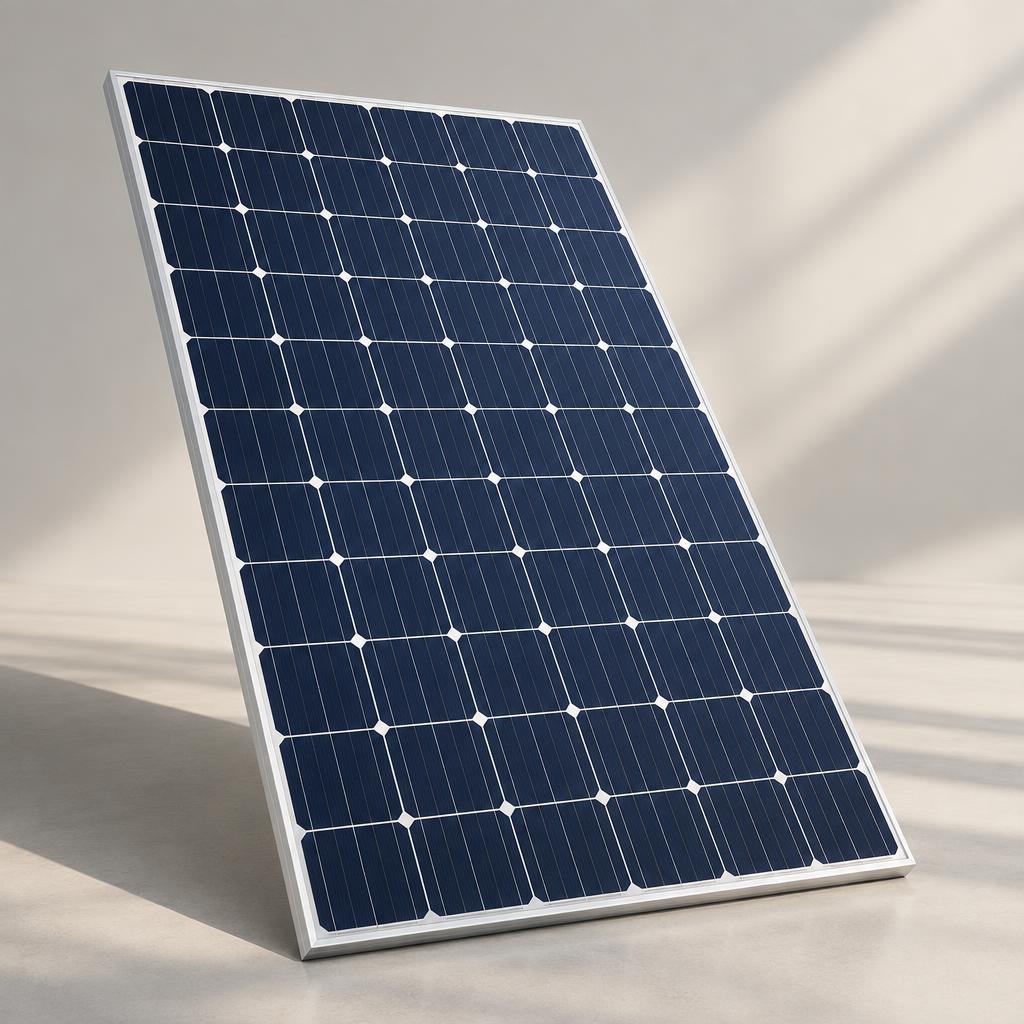
Illustrative image.
1. List the equipment
For lighting, computers, cooling and pumps, record power, quantity and daily operating hours. Separate simultaneous loads and equipment with high starting power. Total power is not enough: operating duration determines daily energy demand.
2. Define the role of solar
Is this an off-grid site, backup supply or a way to reduce grid consumption? State whether a generator is present, typical outages and priority equipment. These details guide inverter choice and source management.
3. Set the useful autonomy
Battery capacity should cover a defined need, not an arbitrary duration. List the equipment running at night and desired backup duration. Voltage, inverter compatibility, installation conditions and usable capacity must be checked with the supplier.
4. Describe the site and existing equipment
Location, roof or ground mounting, shade, available space and cable distances matter as much as power. Attach data sheets for existing equipment to check compatibility. A qualified professional should validate system sizing and installation.
5. Send an actionable request
Bring together the consumption schedule, system voltage, expected autonomy, location and timeframe. KTC can then source components and issue a written quote. Indicative catalogue ranges do not replace engineering assessment or the manufacturer data sheet confirmed with the quote.